What is the torsional resistance of welded mezzanine purlins?
As a supplier of Welding Mezzanine Purlins, I often encounter inquiries about the torsional resistance of these essential structural components. Torsional resistance is a critical factor in the design and performance of welded mezzanine purlins, as it determines their ability to withstand twisting forces and maintain structural integrity under various loading conditions.
Understanding Torsional Resistance
Torsional resistance refers to the ability of a structural member to resist twisting or torsion. In the context of welded mezzanine purlins, torsional resistance is crucial because these purlins are often subjected to non - uniform loading, such as wind loads, eccentric loads, or loads applied at an angle. When a purlin experiences torsional forces, it can deform, which may lead to reduced load - carrying capacity, increased deflection, and even structural failure if the torsional resistance is insufficient.
The torsional resistance of a welded mezzanine purlin depends on several factors, including its cross - sectional shape, material properties, and the quality of the welding. Different cross - sectional shapes have different torsional rigidities. For example, closed - section shapes like tubes generally have higher torsional resistance compared to open - section shapes such as channels or Z - purlins. However, open - section purlins are more commonly used in mezzanine construction due to their ease of fabrication, installation, and cost - effectiveness.
Cross - Sectional Shape and Torsional Resistance
Z - purlins are a popular choice for welded mezzanine purlins. Their unique shape provides a good balance between strength and weight. The Z - shape allows for efficient use of material, as it can resist both bending and some level of torsion. However, compared to closed - section members, Z - purlins have relatively lower torsional resistance. To enhance their torsional performance, z purlin brackets can be used. These brackets z purlin brackets help to connect the purlins to the supporting structure and provide additional restraint against twisting.
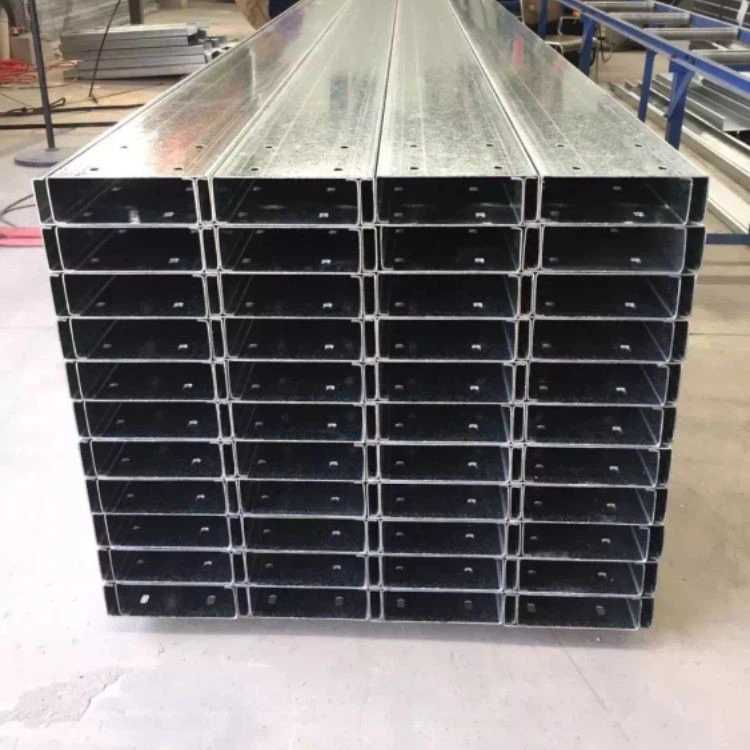
C - purlins are another common type of open - section purlin used in mezzanine construction. Similar to Z - purlins, C - purlins also have limitations in terms of torsional resistance. Their open - web design makes them more susceptible to twisting when subjected to torsional forces. However, proper bracing and connection details can significantly improve their torsional behavior.
Material Properties and Torsional Resistance
The material used in the fabrication of welded mezzanine purlins also plays a vital role in determining their torsional resistance. High - strength steel is often preferred for its superior mechanical properties. Steel with higher yield strength and modulus of elasticity can better resist deformation under torsional loads. Additionally, the quality of the steel, including its chemical composition and microstructure, can affect its torsional performance.
During the welding process, the heat input can alter the material properties in the weld zone. Improper welding techniques can lead to the formation of residual stresses, which may reduce the torsional resistance of the purlin. Therefore, it is essential to use appropriate welding procedures and quality control measures to ensure that the welded joints have sufficient strength and ductility to withstand torsional forces.
Importance of Torsional Resistance in Mezzanine Construction
In mezzanine construction, the torsional resistance of purlins is of utmost importance for several reasons. Firstly, mezzanines are often used for storage, office space, or light manufacturing. The loads on the mezzanine can be non - uniformly distributed, which can create torsional forces on the purlins. If the purlins do not have adequate torsional resistance, they may deform, leading to uneven floor surfaces and potential safety hazards.
Secondly, wind loads can also cause significant torsional forces on mezzanine purlins. In areas with high wind speeds, the purlins need to be designed to resist these forces to prevent structural damage. A well - designed purlin system with sufficient torsional resistance can ensure the stability and durability of the mezzanine structure.
Enhancing Torsional Resistance
There are several ways to enhance the torsional resistance of welded mezzanine purlins. One approach is to use proper bracing systems. Bracing can be in the form of diagonal bracing, horizontal bracing, or a combination of both. Diagonal bracing helps to transfer the torsional forces to the supporting structure, while horizontal bracing provides additional restraint against lateral movement and twisting.
Another method is to improve the connection details between the purlins and the supporting structure. Using high - strength bolts or welds can ensure a rigid connection that can better resist torsional forces. Additionally, the use of z purlin brackets can help to distribute the loads more evenly and reduce the torsional stresses on the purlins.
Role of a Supplier in Ensuring Torsional Resistance
As a supplier of Welding Mezzanine Purlins Welding Mezzanine Purlins, we play a crucial role in ensuring the torsional resistance of our products. We start by using high - quality steel materials that meet the relevant industry standards. Our experienced engineers and technicians carefully design the purlins to optimize their cross - sectional shapes and dimensions for maximum torsional performance.
During the fabrication process, we adhere to strict welding procedures and quality control measures. Our welders are trained to use the appropriate welding techniques to minimize residual stresses and ensure the integrity of the welded joints. We also conduct thorough inspections and testing to verify the quality and performance of the purlins, including their torsional resistance.
Transport and Installation Considerations
Transport and install composite panels Transport and install composite panels are also important aspects that can affect the torsional resistance of welded mezzanine purlins. During transportation, the purlins need to be properly secured to prevent damage and deformation. Improper handling during transportation can cause local damage to the purlins, which may reduce their torsional resistance.
During installation, it is essential to follow the recommended installation procedures. The purlins should be correctly aligned and connected to the supporting structure. Any misalignment or loose connections can lead to increased torsional stresses and reduced performance. Our company provides detailed installation guidelines and technical support to ensure that the purlins are installed correctly and perform as designed.

Conclusion
In conclusion, the torsional resistance of welded mezzanine purlins is a critical factor in mezzanine construction. It depends on various factors such as cross - sectional shape, material properties, and welding quality. As a supplier of Welding Mezzanine Purlins, we are committed to providing high - quality products with excellent torsional resistance. We use advanced design and manufacturing techniques to ensure that our purlins can withstand the torsional forces they may encounter in real - world applications.
If you are in need of high - quality welded mezzanine purlins with reliable torsional resistance, we invite you to contact us for procurement and further discussions. Our team of experts is ready to assist you in selecting the most suitable purlins for your project and providing you with the best solutions.
References
- "Steel Structures: Design and Behavior" by S. Timoshenko and J. M. Gere
- "Design of Cold - Formed Steel Structural Members" by American Iron and Steel Institute (AISI)
- Industry standards and codes related to mezzanine construction and steel purlin design.