

What is the antibacterial performance of sandwich panels?
As a seasoned supplier of sandwich panels, I've witnessed firsthand the growing demand for building materials that not only offer structural integrity but also contribute to a healthier indoor environment. One crucial aspect that often comes under scrutiny is the antibacterial performance of sandwich panels. In this blog, I'll delve into the science behind it, explore the factors influencing it, and highlight how our products stack up in this regard.
Understanding Antibacterial Performance
Antibacterial performance refers to a material's ability to inhibit the growth and spread of bacteria. In the context of sandwich panels, this is of particular importance as they are widely used in various applications, including commercial buildings, cold storage facilities, and cleanrooms. Bacteria can thrive in environments with high humidity, poor ventilation, or organic matter, and if left unchecked, they can pose health risks to occupants and cause damage to the building structure.
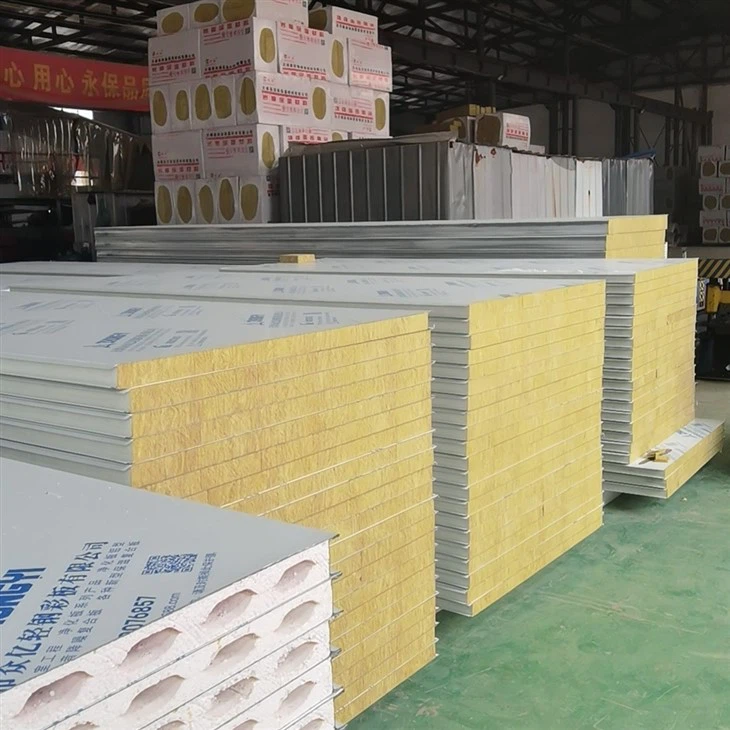

The antibacterial properties of sandwich panels are typically achieved through the use of antibacterial agents incorporated into the panel's core material or surface coating. These agents work by disrupting the cell membranes of bacteria, preventing their growth and reproduction. Some common antibacterial agents used in sandwich panels include silver ions, zinc oxide, and triclosan.
Factors Influencing Antibacterial Performance
Several factors can influence the antibacterial performance of sandwich panels. Understanding these factors is essential for selecting the right panel for your specific application.
- Core Material: The core material of a sandwich panel plays a crucial role in its antibacterial performance. Some core materials, such as rockwool slabs 50mm, have inherent antibacterial properties due to their composition. Rockwool is made from natural volcanic rock, which contains minerals that have antibacterial and antifungal properties. Other core materials, such as polystyrene foam, may require the addition of antibacterial agents to enhance their performance.
- Surface Coating: The surface coating of a sandwich panel can also affect its antibacterial performance. A smooth, non-porous surface is less likely to harbor bacteria than a rough, porous surface. Additionally, some surface coatings are specifically designed to have antibacterial properties. For example, a coating containing silver ions can provide long-lasting antibacterial protection.
- Environmental Conditions: The environmental conditions in which the sandwich panel is installed can also impact its antibacterial performance. High humidity, temperature, and organic matter can create a favorable environment for bacteria growth. Therefore, it's important to ensure proper ventilation and maintenance to minimize the risk of bacterial contamination.
Our Sandwich Panels' Antibacterial Performance
At our company, we take pride in offering sandwich panels with excellent antibacterial performance. Our panels are designed to meet the highest standards of quality and hygiene, making them suitable for a wide range of applications.
- High-Quality Core Materials: We use only the highest quality core materials in our sandwich panels, including rockwool slabs 50mm, which have inherent antibacterial properties. Rockwool is a natural, inorganic material that is resistant to mold, mildew, and bacteria. It also provides excellent thermal insulation and fire resistance, making it an ideal choice for many applications.
- Advanced Surface Coatings: Our sandwich panels are coated with advanced surface coatings that provide additional antibacterial protection. These coatings are designed to be durable, easy to clean, and resistant to scratches and abrasions. They also help to prevent the growth of bacteria and other microorganisms on the surface of the panel.
- Stringent Quality Control: We have a strict quality control process in place to ensure that our sandwich panels meet the highest standards of antibacterial performance. Before leaving our factory, each panel is tested to ensure that it meets our rigorous quality standards. We also work closely with independent testing laboratories to validate the antibacterial performance of our panels.
Applications of Antibacterial Sandwich Panels
Antibacterial sandwich panels are suitable for a wide range of applications where hygiene and cleanliness are a top priority. Some common applications include:
- Commercial Buildings: In commercial buildings, such as offices, hospitals, and schools, antibacterial sandwich panels can help to create a healthier indoor environment for occupants. They can be used for wall and ceiling cladding, partitions, and doors.
- Cold Storage Facilities: Cold storage facilities require materials that can withstand low temperatures and high humidity. Antibacterial sandwich panels are an ideal choice for these applications as they can prevent the growth of bacteria and other microorganisms that can spoil food and cause health problems.
- Cleanrooms: Cleanrooms are used in industries such as pharmaceuticals, electronics, and biotechnology, where a high level of cleanliness is required. Antibacterial sandwich panels can help to maintain a clean and sterile environment by preventing the growth of bacteria and other contaminants.
Conclusion
In conclusion, the antibacterial performance of sandwich panels is an important consideration when selecting building materials for applications where hygiene and cleanliness are a top priority. By understanding the factors influencing antibacterial performance and choosing high-quality sandwich panels with excellent antibacterial properties, you can create a healthier and safer indoor environment for occupants.
If you're interested in learning more about our antibacterial sandwich panels or have any questions about their performance, please don't hesitate to contact us. Our team of experts is always ready to assist you with your building material needs.
References
- ASTM International. (2019). Standard test method for determining the antibacterial activity of immobilized antibacterial agents under dynamic contact conditions. ASTM E2149-19.
- ISO 22196:2011. Plastics — Measurement of antibacterial activity on plastics surfaces.
- Silver, S. (2003). Bacterial silver resistance: molecular biology and uses and misuses of silver compounds. FEMS Microbiology Reviews, 27(2-3), 341-353.
